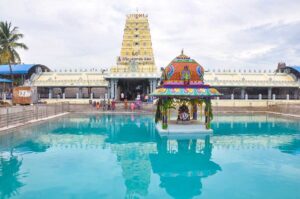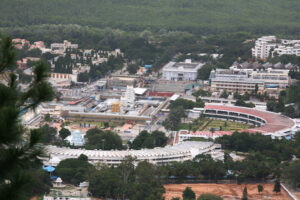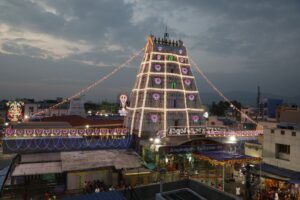
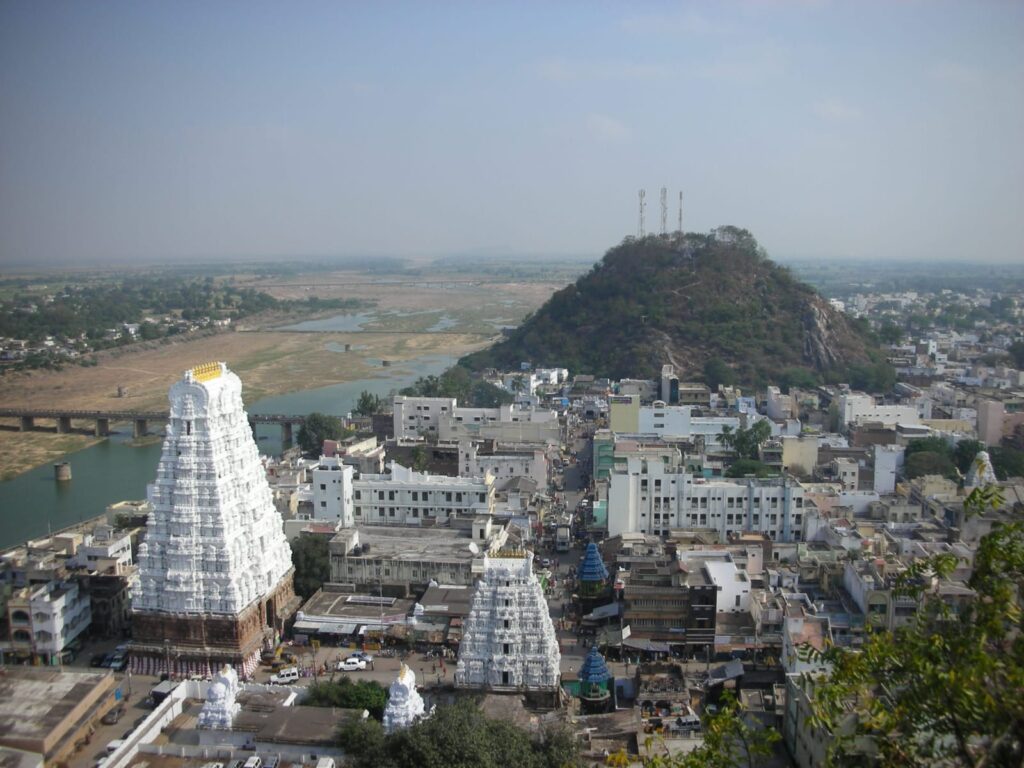
Sri Kalahasti, often referred to as Kalahasti, is a significant temple town located in the Chittoor district of Andhra Pradesh, India. The town is renowned for the Sri Kalahasteeswara Temple, a revered Hindu shrine dedicated to Lord Shiva. The temple is one of the most important in South India and holds a rich history intertwined with mythology and devotion.
Detailed Historical and Mythological Context:
 Mythological Legend:
The Story of the Spider, Serpent, and Elephant: According to legend, a spider (Sri), a serpent (Kala), and an elephant (Hasti) worshipped the Shiva Linga at this site. The spider spun a web to protect the Linga from the elements, the serpent placed gems around the Linga, and the elephant bathed the Linga with water from the nearby river. Lord Shiva, pleased with their devotion, granted them salvation and eternal presence in the name of the town, Sri Kalahasti.
Kannappa Nayanar: Another popular legend associated with Sri Kalahasti is that of Kannappa, one of the 63 Nayanars (devotees of Shiva). Kannappa, a tribal hunter, offered his eyes to the deity when he saw blood flowing from the Linga, thinking the deity was hurt. His extreme devotion moved Lord Shiva, who restored Kannappa’s eyesight and granted him Moksha (liberation).
Historical Timeline:
Pallava and Chola Dynasties: The earliest recorded history of the temple begins with the Pallava dynasty (4th to 9th centuries CE), who were instrumental in constructing the initial structures of the temple. The Chola dynasty (9th to 13th centuries CE) further expanded the temple complex, with inscriptions from their period documenting various endowments made to the temple.
Vijayanagara Empire: The temple gained prominence under the rule of the Vijayanagara kings, particularly during the reign of King Krishnadevaraya in the 16th century. Krishnadevaraya is said to have constructed the massive gopuram (tower) at the temple’s entrance and made significant donations to the temple, solidifying its status as a major religious site.
Architectural Features:
Gopuram and Vimana: The temple’s towering gopuram, standing at 120 feet, is an architectural marvel that dominates the landscape. The Vimana (the tower above the sanctum) is another significant feature, intricately carved with depictions of various deities and mythological scenes.
Inner Sanctum: The main sanctum houses the self-manifested Linga, which is worshipped as Kalahasteeswara. The sanctum is designed in such a way that even a slight breeze can be felt, symbolizing the presence of the Vayu (air) element.
100-Pillared Hall: The temple also features a 100-pillared hall, constructed during the Vijayanagara period, which showcases the artistic and architectural skills of that era. The hall is adorned with intricate carvings and sculptures that depict various episodes from Hindu mythology.
Cultural and Religious Practices:
Rahu-Ketu Pooja: One of the unique aspects of Sri Kalahasti is the Rahu-Ketu Pooja, a special ritual performed by devotees seeking relief from the ill effects of Rahu and Ketu in their astrological charts. The temple is considered the best place to perform this pooja, attracting thousands of devotees daily.
Festivals: The temple celebrates several important festivals, including Maha Shivaratri, which is marked by grand processions, special rituals, and a large influx of pilgrims. The Brahmotsavam, held annually, is another major festival where the deity is taken on a procession in a chariot around the temple.
Cultural Contributions:
Kalamkari Art: The town of Sri Kalahasti is also known for its contribution to Kalamkari, an ancient art form of hand-painting on fabric. The designs often depict scenes from Hindu epics and temple architecture, making it a significant cultural export of the region.
Modern Era and Tourism:
In modern times, Sri Kalahasti has become a popular destination for both pilgrims and tourists. The town’s proximity to Tirupati, another major pilgrimage site, adds to its accessibility and appeal. The temple town also continues to thrive as a center of traditional crafts, particularly Kalamkari, which has gained international recognition.
The spiritual aura of Sri Kalahasti, coupled with its rich history and cultural heritage, makes it a significant landmark in the religious and cultural landscape of South India.